Instructor
CDL Study Buddy Team
The CDL driving skills test — commonly called the road test — is the final and most comprehensive portion of your CDL exam. This video provides a complete overview of what to expect, what examiners look for, and how to demonstrate the driving competence that earns a passing score.
The driving skills test evaluates your ability to operate a commercial motor vehicle safely in real traffic conditions. It typically lasts 45-60 minutes and covers urban, suburban, and highway driving. The examiner sits in the passenger seat with a scoring sheet and evaluates dozens of specific skills.
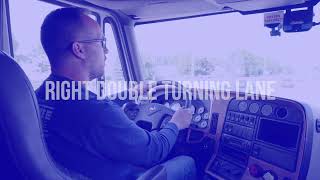
The video breaks down the test into its major evaluation categories. Vehicle control skills include smooth acceleration and braking, proper steering technique (hand-over-hand or push-pull, not palming the wheel), and maintaining lane position. The instructor demonstrates what proper lane position looks like — centered in the lane with the vehicle straight — and what drifting or weaving looks like to an examiner.
Traffic interaction evaluation covers how you handle intersections, merge into traffic, change lanes, and respond to other drivers. The instructor explains proper merging technique: matching speed to the traffic flow before entering, using the full acceleration lane, and yielding to traffic already on the highway. Lane changes must be signaled well in advance (at least five seconds), mirrors checked, blind spots verified, and the maneuver executed smoothly.
Pre-trip and post-trip procedures during the road test are explained. Examiners watch how you enter and exit the vehicle (three points of contact), adjust and use mirrors, fasten your seat belt, and check gauges. These seemingly minor items add up to significant point deductions if performed incorrectly.
Speed and space management during the test is critical. The instructor explains that examiners want to see speed appropriate for conditions — slightly below the limit is fine, exceeding it by even one MPH is a potential failure. Space management includes following distance, stopping position at intersections (you must see the rear tires of the vehicle ahead touching the pavement), and lateral clearance when passing parked cars or bicyclists.
Special test scenarios are covered: railroad crossings (stop 15-50 feet from the nearest rail if required, look and listen, cross in a gear that allows you to clear without shifting), bridge and overpass clearance awareness, and school zones. The video also explains how examiners handle emergency situations during tests and what to do if you need to discontinue the test.
For official CDL testing standards, visit the FMCSA at https://www.fmcsa.dot.gov/. Combine this comprehensive overview with our free CDL practice tests and behind-the-wheel practice for the best chance of first-attempt success.