Instructor
CDL Study Buddy Team
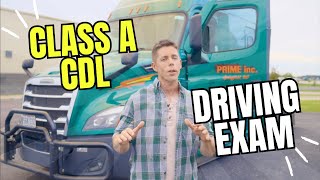
Defensive driving is the single most important safety skill for commercial drivers, and CDL examiners evaluate it continuously throughout your road test. This video teaches the defensive driving principles that protect you, your cargo, and everyone sharing the road.
The foundation of defensive driving is proper following distance. For commercial vehicles, the minimum safe following distance is one second for every 10 feet of vehicle length at speeds below 40 MPH, plus an additional second for speeds above 40 MPH. For a typical 65-foot tractor-trailer at highway speed, this means at least seven seconds of following distance. The instructor demonstrates how to measure following distance using fixed reference points and explains why the "two-second rule" for passenger cars is dangerously insufficient for trucks.
Speed management receives detailed coverage beyond simply obeying posted limits. The instructor explains how to adjust speed for road conditions, weather, traffic density, and visibility. You will learn that the safest speed is often well below the posted limit, particularly on curves, downgrades, and in construction zones. The video demonstrates the relationship between speed and stopping distance — a fully loaded tractor-trailer at 55 MPH requires approximately the length of a football field to stop.
The hazard scanning technique is demonstrated with real driving footage. The instructor's commentary indicates where to look, what to watch for, and how far ahead to scan (ideally 12-15 seconds down the road). You will learn to identify potential hazards — merging vehicles, pedestrians near crosswalks, stale green lights, vehicles following too closely, and distracted drivers — before they become immediate threats.
Space cushion management is explained as the practice of maintaining adequate space on all four sides of your vehicle whenever possible. The instructor shows how to adjust speed and lane position to create escape routes and shows real-world scenarios where space cushions prevent collisions.
Additional topics include: communicating intentions with signals, brake lights, and eye contact; managing the behavior of other drivers who don't understand truck limitations; techniques for maintaining focus and combating highway hypnosis on long drives; and the importance of pre-trip route planning to avoid known hazards.
Defensive driving is a mindset as much as a skill set. For official FMCSA guidance on defensive commercial driving, visit https://www.fmcsa.dot.gov/. Supplement this training with our free CDL practice tests for comprehensive preparation.