Section 1 of 13
Introduction
Introduction
Preface
INTRODUCTION ................................................................ 1-1
DRIVING SAFELY .............................................................. 2-1
TRANSPORTING CARGO SAFELY .................................. 3-1
TRANSPORTING PASSENGERS SAFELY ...................... 4-1
AIR BRAKES ...................................................................... 5-1
COMBINATION VEHICLES ............................................... 6-1
DOUBLES AND TRIPLES .................................................. 7-1
TANK VEHICLES ............................................................... 8-1
HAZARDOUS MATERIALS ................................................ 9-1
SCHOOL BUSES ............................................................. 10-1
PRE-TRIP VEHICLE INSPECTION TEST ....................... 11-1
BASIC VEHICLE CONTROL SKILLS TEST .................... 12-1
ON-ROAD DRIVING ......................................................... 13-1
Table Of Contents
(1) A tax return, W-2 form or paycheck stub; (2) A utility bill or a letter from a utility company showing application for service; (3) A contract to which the applicant is a party; or (4) A document issued by a governmental entity.
A person who is unable to provide acceptable documentary evidence as outlined above, may meet the requirements of the statute by either:
(1) Submitting the affidavits of 2 individuals who have a personal or professional relationship with the person and knowledge of the person and the person’s residence or domicile, which may include a shelter, in this State. A single affidavit signed by a parent or guardian of a minor making an application is sufficient to meet the residency requirements. The affidavit is a sworn statement and a false statement by the affiant constitutes false swearing, which is a violation of Title 17- A Section 452. The Secretary of State shall provide forms for the completion of affidavits (available at any Bureau of Motor Vehicles branch office or online at http://www.maine.gov/sos/bm v/forms); or (2) By taking an oath or
Preface
The Maine State Legislature has passed and the Governor has signed into law, legislation to strengthen and implement residency requirements for the issuance of a Maine driver’s license or a nondriver identification card.
A license may not be issued to a person unless the person presents acceptable documentary evidence of the person’s residence or domicile in this State. The Secretary of State may exempt from the requirements a person who has established to the satisfaction of the Secretary of State that the person is on active duty in the United States Armed Forces, the spouse or child of a person on active duty in the United States Armed Forces or a student enrolled in a university, college or school within the State.
Acceptable documentary evidence of a person’s residence or domicile in this State must include the Applicant’s name and the address of the person’s residence or domicile in the State. A post office box or other mail drop address is not sufficient. Acceptable documentary evidence includes, but is not limited to: affirmation before the Secretary of State (or his designee), swearing to the person’s residence or domicile which may include a shelter.
An applicant who supplies false information pursuant to this statute makes a material misstatement of fact described in MRSA 29-A Section 2103 and is subject to the penalties under that section. PRESENCE AND HOW IT AFFECTS OBTAINING OR RENEWING A LICENSE
You cannot obtain or renew a driver’s license or non driver identification card unless you provide acceptable valid documentary evidence of legal presence in the United States. To establish evidence of legal presence you must present a legible, unexpired, valid document from the list as follows:
A. Certified copy of a birth certificate from a State Office of Vital Statistics or equivalent agency showing the individual was born in:
(1) a State of the United States, (2) District of Columbia, (3) Puerto Rico after January 12, 1941, (4) Virgin Islands after January 16, 1917, (5) Guam after April 11, 1899, (6) American Samoa after February 15, 1900, (7) Swains Island after March 3, 1925, or (8) Commonwealth of Northern Mariana Islands after January 8, 1978;
B. United States Passport or Passport Card,
- a. person’s foreign birth certificate,
- b. proof of citizenship of parent, and
- c. evidence of the applicant’s legal relationship to parent. Persons born outside the United States claiming citizenship through two United State citizen parents may present: C. Consular of Report of Birth Abroad, Certificate of Report of Birth or Certification of Report of Birth D. Certificate of Naturalization, E. Certificate of U.S. Citizenship, F. United States Citizen Identification Card, G. Identification Card for Resident Citizen in the U.S., H. American Indian Card, or I. Northern Mariana Identification Card. Acceptable alternative documents for a person born in the United States may include:
- 1. A certified letter from a jurisdiction listed above stating that no birth record exists. The letter must include the person’s name, date of birth, the years covered by the search for a birth record, and that there is no birth record on file; and IMPORTANT INFORMATION REGARDING LEGAL
- a. baptismal certificate, religious record or tribal record showing name, date of birth and the birth occurred in a jurisdiction listed above.
- b. hospital birth certificate showing name, date of birth and the birth occurred in a jurisdiction listed above.
- c. doctor’s record of birth showing name, date of birth and the birth occurred in a jurisdiction listed above, or
- d. newspaper or insurance files showing name, date of birth and the birth occurred in a jurisdiction listed above. Persons born outside the United States claiming citizenship through one United States citizen parent may present:
- a. person’s foreign birth certificate,
- b. parent’s marriage certificate or evidence of the applicant’s relationship to the citizen parents, and
- c. proof of citizenship of parents. Non Citizen. A person not claiming citizenship may present the following documents to establish evidence of legal presence in the United States: (For additional information and a complete list of acceptable documents/forms please visit www.maine.gov/sos/bmv/ A. Permanent Resident Card or Resident Alien Card, B. Memorandum of Creation of Record of Lawful Permanent Residence, C. Arrival/Departure Form I-94 or foreign passport with the notation “Processed for I- 551” or I-551 Alien Documentation and Identification System (ADIT) stamp, D. Temporary Resident Card, E. Reentry Permit, F. Employment Authorization Card, G. Travel Document or Refugee Travel Document,
- 2. A document issued by the United States or a jurisdiction listed above, showing the name, date of birth and the birth occurred in a jurisdiction listed above, including military discharge records, census records, and school records; or
- 3. At least one of the following: H. An Arrival/Departure card, Form I-94 stamped or endorsed. I. Notice of Action or other official notification showing the period of admission, J. Student and Exchange Visitor Information System (SEVIS) (Form I-20) or (DS-2019) properly endorsed or stamped, K. Letter, order, appellate decision, Arrival/Departure Form I-94 or foreign passport stamped with Section 207 – Refugee, Section 208-Asylee, Section 212(d)(5) – Parolee, or Cuban/Haitian Entrant, Section 243(h), Section 241(b)(3), or Conditional Entrant, L. Arrival/Departure Form I-94 or Canadian passport coded S13, M. Letter or tribal document establishing person is an American Indian born in Canada, N. Letter, order, appellate decision or Arrival/Departure Form I-94 showing a grant of asylum, O. An approved or pending application for asylum, A driver’s license or non driver identification card issued to a non-citizen may be issued for a period of time less than the terms described in statute. A. A credential will not be issued if the authorized period of admission is less than a 120 days. B. A credential will expire on the date indicated as the expiration date of the authorized period of admission. C. If the authorized period of admission is duration of status, the issued credential will expire four (4) years from date of issuance. D. If the authorized period of admission is neither, duration of status or indicated by a specific date, the issued credential will expire 120 days from the date of issuance. On October 26, 1986, Congress passed the Commercial Motor Vehicle Safety Act. This law requires each state to meet the same minimum standards for commercial driver licensing. The standards require commercial motor vehicle operators to get a Commercial Driver’s License (CDL). Under Maine law, you must have a CDL to operate any of the following vehicles: Any combination of vehicles with a gross combination weight rating of 26,001 or more pounds, provided the gross vehicle weight rating or gross weight of the vehicle or vehicles being towed is in excess of 10,000 pounds.
- • Any single vehicle with a gross vehicle weight rating of 26,001 or more pounds or any such vehicle towing a vehicle not in excess of 10,000 pounds gross vehicle weight rating or gross weight.
- • Any vehicle designed to carry more than 15 passengers including the driver.
- • Any size vehicle that transports hazardous material requiring placarding under the federal Hazardous Material Transportation Act and related regulations In 49 Code of Federal Regulations, Part 172, subpart F. Exemptions The following vehicles are exempt from the commercial licensing requirements:
- • Firefighting apparatus as described in 49 code of Federal Regulations, Section 383.3 (2005) being operated by a volunteer or full-time member of an organized municipal, state or federal fire department;
- • Recreational vehicles for personal use;
- • A person to operate commercial motor vehicles for military purposes as required in 49 Code of Federal Regulations, Section 383.3 (2005);
- • A person to operate registered farm motor trucks bearing the letter “F” on the registration plate when the vehicle is: (a) Controlled and operated by a farmer, including operation by the farmer’s employees or family members; (b) Used to transport agricultural products, farm machinery or farm supplies to or from a farm; (c) Not used in the operation of a common or contract motor carrier; and (d) Used within 150 miles of the registered owner’s farm.
- • A person, employed by a city, town, county, district or other unit of local government created by or pursuant to law that has a total population of 3,000 individuals or less, to operate a commercial motor vehicle within the boundaries of that unit of local government for the purpose of removing snow or ice from a roadway by plowing, sanding or salting, if: (a) The properly licensed employee who ordinarily operates a commercial motor vehicle for those purposes is unable to operate the vehicle; or (b) The employing governmental entity determines that a snow or ice emergency exists that requires additional assistance.
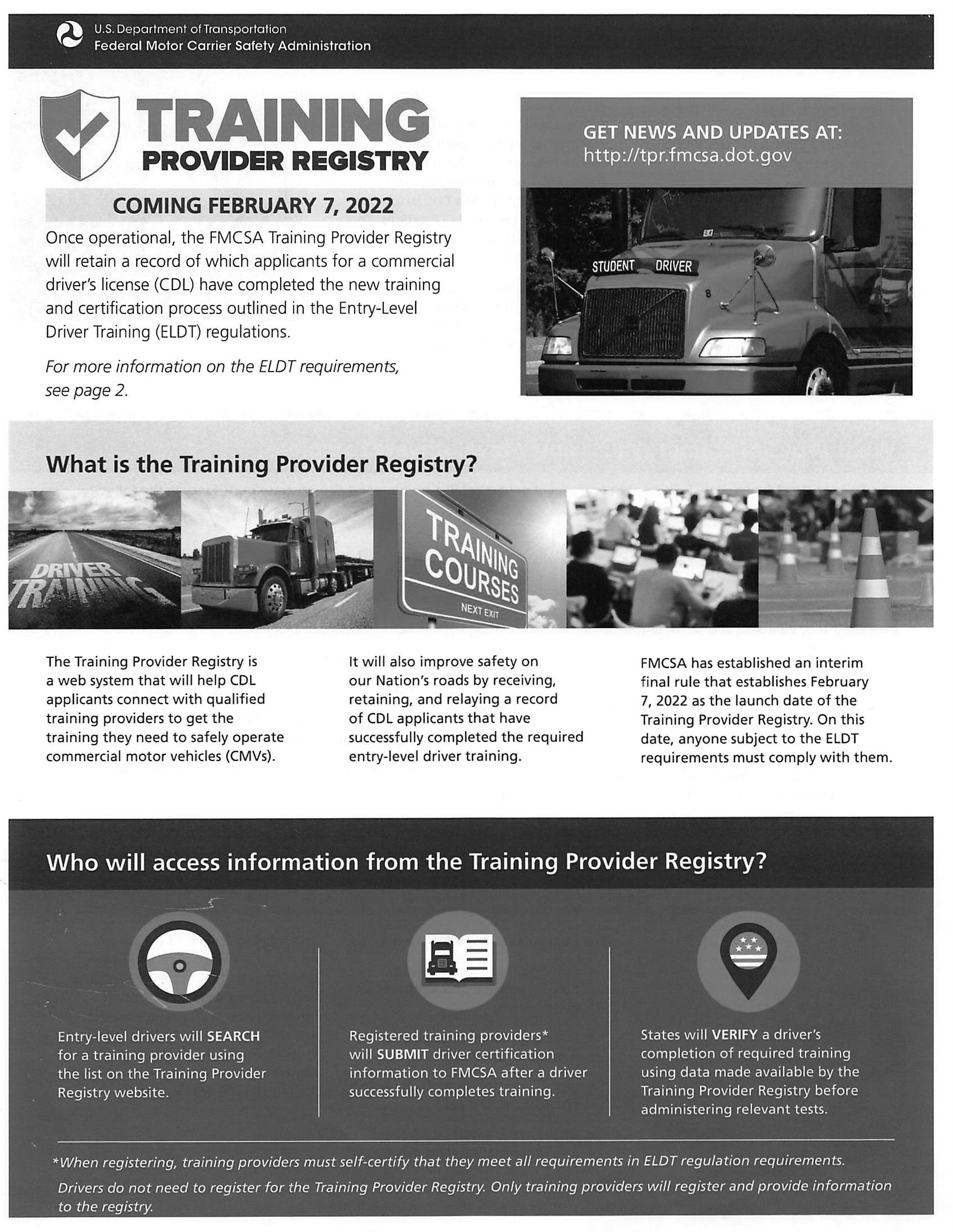
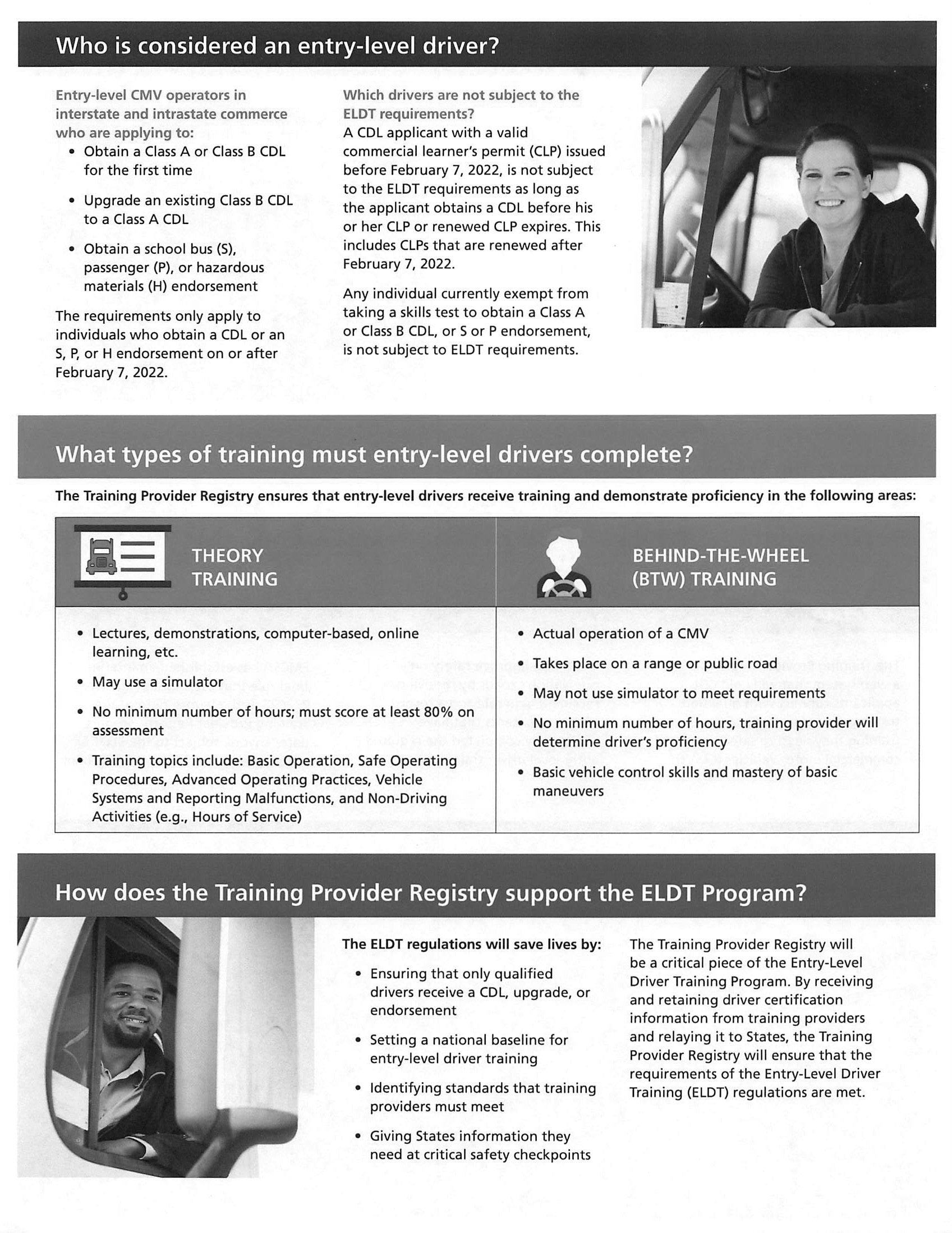
- • A person to operate a truck registered as an antique automobile, regardless of weight or combination weight, provided the vehicle is used for non commercial recreational purposes or purposes pursuant to Maine Motor Vehicle Statutes Title 29-A Section 101, subsection 3. You must be at least 16 years of age to operate a Commercial Motor Vehicle; 21 years of age to operate a bus or carry hazardous materials. Be sure to check with the Department of Public Safety, Motor Carrier Division regarding vehicle operator limitations of commercial vehicles, concerning intrastate motor carriers, age requirements and any distance restrictions that may apply. Their telephone number is (207) 624-8909. How to Apply for a Commercial Driver’s License (CDL) You may get an application for a Maine CDL from any office of the Bureau of Motor Vehicles or from most city or town offices. The CDL application is also available online at: www.maine.gov/sos/bmv/forms The application with the appropriate fees must be mailed to: Secretary of State Bureau of Motor Vehicles State House Station 29 Attn: CDL Examination Section Augusta, Maine 04333 Entry Level Driver Training (ELDT) Effective February 7, 2022 the Federal Motor Carrier Safety Administration implemented a new regulation requiring driver training for new CDL operators and those wishing to upgrade their existing CDL. For more ELDT information, access the website https://tpr.fmcsa.dot.gov.
Your appointment will be scheduled through the main office in Augusta. An appointment notice showing the location, date and time for your knowledge test(s) will be returned to you. If you are applying for the skills test in addition to the written test, another appointment will be made for the off street skills and road test. This separate appointment is necessary due to the length of the examination.
Upon successful completion of the eye and knowledge examination, the appropriate learner’s permit will be issued along with a skills test request card.
Knowledge test applicants need to be thoroughly familiar with the information contained in this manual.
Limitations of the Learner’s Permit
While operating motor vehicles, the operator must:
- 1. Carry a valid learner’s permit properly signed by the person to whom it was issued and have it available to be produced upon the request of any law enforcement officer.
- 2. Be accompanied by a licensed operator who: A. Holds a license with the corresponding class and endorsements which is valid covering the type of vehicle being operated. B. Has held a valid license for two years. C. Is occupying a seat beside the driver, and D. Is at least 20 years of age or; is at least 22 years of age if the vehicle being driven is a bus or school bus. A learner’s permit is valid for a limited time period or until the holder shall have received a
Commercial Driver’s License.
It is unlawful to operate any motor vehicle or combination of vehicles not covered by your class of license, including endorsements or learner’s permit. Vision Requirements
The examiner will screen your vision. The minimum visual acuity (clearness of vision) is a distance rating of 20/40 with best eye. You must also have a field of vision total of at least 140 degrees in order to avoid being restricted to left and right outside mirrors. If you cannot attain the 20/40 visual acuity reading or have a field of vision of less than 110 degrees, the examiner will refer you to an eye doctor of your choice for a vision examination. No permit will be issued until you present a properly completed doctor referral form to show the visual requirements have been met. If you meet the visual requirements with glasses or contact lenses, the permit and operator’s license will be restricted to corrective lenses. School bus operators may be subject to more stringent vision requirements.
Change of Class, Restriction, or Endorsement
Drivers holding a Maine Commercial Driver’s License and who desire to amend their license for restriction removal, endorsement addition or change of class may do so at any time.
Change of Class
For a change of class, an applicant must apply and qualify on the knowledge examination, vision screening and be issued a learner’s permit and skills test request card. A skills test must be scheduled through the main office and the applicant must qualify on a skills test, pre-trip vehicle inspection, and road test for an upgraded CDL to be issued.
A Class “A” CDL with appropriate endorsements allows the operation in all of the other classes. A Class “B” CDL with appropriate endorsements allows operation in all classes except Class “A”. A Class “C” CDL is limited to operation in that class only and must include an endorsement for passenger bus vehicles or hazardous materials.
Operation of Vehicles Equipped With Air Brakes Not Allowed Restriction
A component of the CDL test covers information about air braking systems. An applicant must qualify on this portion of the examination and must take the skills test in an air brake equipped vehicle in order to avoid the air brake restriction. An air brake restriction will prohibit the driver from operating an air brake equipped vehicle. To have the restriction removed, an applicant must apply and qualify on the air brake knowledge test and must qualify on the skills test in an air brake equipped vehicle. The driver accompanying the permit holder must have a license and appropriate endorsements or the test will be refused.
Endorsement There are six (6) endorsement knowledge tests available for the applicant wishing to operate specialized vehicles with specific loads. These endorsements have been coded to appear on the CDL document.
These endorsements include:
- • N For the operation of tank vehicles only.
- • H For the operation of vehicles carrying hazardous material when required to be placarded by Federal DOT regulation only.
- • X For the operation of tank vehicles carrying hazardous materials. This combines the endorsements “N” and “H” into one.
- • T For the operation of double/triple trailers where allowed by law. (Triple trailers not allowed in Maine.) The N-H-X and T endorsements will be awarded to the CDL holder upon the successful completion of the knowledge examination only. The remaining endorsements require the complete test including skills testing. These include endorsements:
- • P For the operation of passenger vehicles designed to transport over 15 passengers including the driver. The skills test for this endorsement must be completed in a vehicle representative of the type the driver operates or expects to operate in Class A, B or Class C. •S For the operation of school buses designed to transport over 15 passengers including the driver. Applicants desiring this endorsement should review the school bus portion of this manual for specific information. Successful qualification will also earn the endorsement P without an additional fee or further examination. These endorsements can only be added to a Commercial Driver's License. If an applicant does not have a CDL, the endorsements will not be awarded until a CDL is obtained. “3” endorsement There is one type of school bus operation which does not require the driver to possess a CDL. This school bus is designed to transport 15 passengers or fewer including the driver. The endorsement could be affixed to a non-commercial license. The applicant would submit to a school bus knowledge and skills test in a vehicle representative of this class with a GVWR of 26,000 pounds or less and would result in the awarding of endorsement “3". SKILLS TESTING FOR CLASS “A”, CLASS “B”, OR PASSENGER/SCHOOL BUS VEHICLES These tests are administered to check the drivers ability to maneuver the vehicle within a limited space to demonstrate the knowledge and ability needed to inspect the vehicles condition and drivability prior to on road driving and the ability to exercise ordinary and reasonable control over a predetermined road test route. The skills test is broken down into three parts: the off-road skills test, the pre-trip vehicle inspection, and on-road test. HOW DO I SCHEDULE A SKILLS TEST? In order to be scheduled for skills testing, you must mail the skill test request card to the Bureau of Motor Vehicles in Augusta. An appointment notice will be returned to you indicating the place, date and time you are to appear for examination. You must be punctual! If you are late for an appointment, there is a chance the skills test will not be completed and another appointment will need to be scheduled. There is a possibility that no portion of the test will be given due to the lack of available time. If you do not notify the CDL examination section of an appointment cancellation within 48 hours, a penalty fee of $70.00 will be assessed before another date is scheduled. Failure to appear for testing without cancellation will result in no further notification until you have contacted the Bureau of Motor Vehicles, CDL Examination Section, Augusta, Maine 04333 indicating that you are now ready for examination. You will then be rescheduled as soon as possible. Do not submit a new application. Examinations are not conducted on Saturdays, Sundays or holidays. Class C: any single vehicle or combination of vehicles that does not meet the definitions of Class A or Class B. A Class C license is a commercial driver’s license only if it carries an endorsement under 29-A MRSA Section 1253, subsection 3. Holders of a Class C license may, with any appropriate endorsements, operate all vehicles in that class. No person except the applicant and the examiner will be permitted in the vehicle(s) during any part of the test. The applicant must supply a vehicle for the skills test in the class applied for. Vehicles that are placarded for hazardous materials may not be used for road testing purposes. NOTE: Highway use restrictions prohibit combination vehicles exceeding 74 feet in length or combination vehicles having a trailer which exceeds 53 feet in length to be used for testing purposes. Also, Federal Motor Carrier Safety Regulations prohibit a truck tractor (bobtail) to be used for Class B testing purposes. The road test will be refused if the load on the vehicle is not secured to prevent it from shifting, leaking, or dropping or if it's carrying a cargo or part of a cargo consisting of:
- • Explosives
- • Flammable material or
- • Dangerous Articles The tailgate should be closed and secured except where the load makes it impossible. Upon passing all phases of the skills test, the applicant must surrender the learner’s permit in order to receive a Commercial Drivers License. The Commercial Motor Vehicle Safety Act passed by Congress requires that any commercial vehicle skills or road testing be conducted in a vehicle representative of the type which the applicant operates or expects to operate. Social Security Number Disclosure Statement This statement is made in accordance with the Federal Privacy Act of 1974, Section 7 (b). Disclosure of your social security number is mandatory and is required by 29-A MRSA Section (5) and (6) to apply for or renew a driver’s license or nondriver identification card. Your social security number will be used solely for identification purposes and will be kept confidential. WHAT SHOULD I BRING WITH ME FOR TESTING? At the appointed time you must:
- 1. Present to the examiner the appointment notice properly completed and signed;
- 2. Present your learner’s permit and/or valid out of state license for the class of vehicle being operated;
- 3. Present the license of the person accompanying you which must be valid for the type of vehicle being operated. The accompanying operator must remain at the test site until the examination is completed. (An out of state licensee holding a valid license within the class of application does not need to be accompanied by a licensed operator.)
- 4. Present the valid registration(s) of the vehicles(s) being used for the test. No photocopies are permitted unless the vehicle is a rental unit or permission to photocopy has been granted by the Secretary of State in writing. A rental agreement will not be allowed as a substitution for the valid registration. The vehicle must also display a valid inspection sticker and must meet the state's minimum requirement for inspection.
- 5. If the application was made for a change of class of license, the Maine license and any other valid licenses must be surrendered to the examiner. DEFINITIONS OF CLASSES Class A: any combination of vehicles with a gross combination weight rating of 26,001 or more pounds, provided the gross vehicle weight rating or gross weight of the vehicle or vehicles being towed is in excess of 10,000 pounds. A Class A license is a commercial driver’s license. Holders of a Class A license may, with any appropriate endorsements, operate all vehicles in Class B and Class C; Class B: any single vehicle with a gross vehicle weight rating of 26,001 or more pounds or any such vehicle towing a vehicle not in excess of 10,000 pounds gross vehicle weight rating or gross weight A Class B license is a commercial driver’s license. Holders of a Class B license may, with any appropriate endorsements, operate all vehicles in Class C; TO: COMMERCIAL DRIVER LICENSE HOLDERS WITH HAZARDOUS MATERIALS ENDORSEMENTS SUBJECT: NOTIFICATION OF SECURITY THREAT ASSESSMENT AND LEGAL PRESENCE REQUIREMENTS FOR CDL HOLDERS WITH HAZARDOUS MATERIALS ENDORSEMENTS The federal Transportation Security Administration (TSA) and the U.S. Department of Transportation have issued rules to secure the transport of hazardous materials, including explosives. The rules require a security threat assessment on commercial drivers certified to transport hazardous materials (hazmat). The security threat assessment includes the collection of an individual’s fingerprints, and verification of United States Citizenship, immigration eligibility or permanent legal presence in the United States. Under current federal regulations, states were required to implement the security threat assessment requirement on January 31, 2005 for new applicants and no later than May 31, 2005 for renewal and state-to-state transfer applicants. After the implementation deadlines, no CDL with a hazmat endorsement may be issued unless the applicant has first undergone the security threat assessment and obtained clearance from the Transportation Security Administration. State motor vehicle agencies must notify CDL holders with the hazmat endorsement of the new requirements. Renewal applications must be filed no later than 30 days prior to license expiration to allow time for the security threat assessment to be completed. This letter is intended to serve as notification of the new requirements. Individuals who currently have a CDL with a hazmat endorsement who do not meet the qualification requirements described in this notification are required to immediately surrender the CDL (with hazmat endorsement) to a state driver licensing office. If otherwise qualified and all applicable fees are paid, the applicant may be re-issued a CDL without a hazmat endorsement. Citizenship or Immigration Status Requirements: An applicant for an HME must be one of the following:
- • A citizen of the U.S. who has not renounced his/her U.S. citizenship
- • A lawful permanent resident of the U.S. as defined in section 101(a)(20) of the Immigration and Nationality Act (8 U.S.C. 1101)
- • A lawful nonimmigrant in possession of valid, unrestricted employment authorization
- • A refugee admitted under section 8 U.S.C. 1157 in possession of valid unrestricted employment authorization
- • In asylum status under section 8 U.S.C. 1158 in possession of valid, unrestricted employment authorization
- a) Espionage
- b) Sedition
- c) Treason
- d) A federal crime of terrorism as defined in 18 U.S.C. 2332b(g), or comparable State law
- e) A crime involving a transportation security incident f) Improper transportation of a hazardous material under 49 U.S.C. 5124 or a State law that is comparable
- g) Unlawful possession, use, sale, distribution, manufacture, purchase, receipt, transfer, shipping, transporting, import, export, storage of, or dealing in an explosive or explosive device
- h) Murder i) Making any threat, or maliciously conveying false information knowing the same to be false, concerning the deliverance, placement, or detonating of an explosive or other lethal device in or against a place of public use, a state or government facility, a public transportation system, or an infrastructure facility. j) Violations of the Racketeer Influenced and Corrupt Organizations Act, 18 U.S.C. 1961, et seq., or a State law that is comparable, where one of the predicate acts found by a jury or admitted by the defendant, consists of one of the offenses listed in Part A of this section
- k) Conspiracy or attempt to commit any of these crimes Part B: Interim Disqualifying Offenses A driver will be disqualified from holding a TWIC or a HME on a CDL if he or she was convicted or found not guilty by reason of insanity within the previous seven years or was released from prison in the last five years for any of the following felonies:
- a) Unlawful possession, use, sale, List of criminal disqualifiers for the TSA security threat assessment for HME and TWIC applicants, as of February 5, 2007. Section 1. List of Disqualifying Criminal Offenses for Hazardous Materials Endorsement Part A: Permanently Disqualifying Criminal Offenses: An applicant will be permanently disqualified from holding a TWIC or a HME on a CDL if he or she was convicted or found not guilty by reason of insanity for any of the following felonies: Certification and/or disclosure of the following is also required: • The applicant has not been convicted or found not guilty by reason of insanity of any of the interim disqualifying crimes in any jurisdiction, civilian or military, during the seven years before the date of application. • The applicant has not been released from incarceration in any jurisdiction, civilian or military, for committing any interim disqualifying crime during the 5 years before the date of application. • The applicant has not been convicted or found not guilty by reason of insanity of any permanently disqualifying crime. • The applicant is not wanted or under indictment in any jurisdiction, civilian or military, for a disqualifying crime. • The applicant has not been adjudicated as lacking mental capacity or committed to a mental institution involuntarily. • The applicant is either a United States citizen who has not renounced United States citizenship, or a lawful permanent resident of the United States, or meets eligibility requirements for immigration status. • Disclosure of the applicant’s military service and date of discharge Additional information is available at the TSA website at http://www.tsa.gov (Once at the site, use search word “HAZMAT”). Once you have passed the hazardous materials written examination, you may begin the fingerprint/background records check process. The fees associated with that requirement are $89.25 and must be paid to the TSA agent. The TSA agent has established a helpdesk information telephone number 1 877 429-7746 and a website https://universalenroll.dhs.gov. manufacture, purchase, distribution, receipt, transfer, shipping, transporting, delivery, import, export of, or dealing in a firearm or other weapon
- b) Extortion importation of a controlled substance
- h) Arson i) Kidnapping or hostage taking j) Rape or aggravated sexual abuse
- k) Assault with intent to murder l) Robbery
- m) Fraudulent entry into a seaport as described in 18 U.S.C. 1036, or a comparable State law
- n) Violations of the Racketeer Influenced and Corrupt Organizations Act, 18 U.S.C. 1961, et seq., or a State law that is comparable, other than the violations listed in paragraph (j) of Part A: Permanently Disqualifying Criminal Offenses
- o) Conspiracy or attempt to commit the any of these crimes Part C: Under Want or Warrant: A driver will be disqualified from holding a TWIC or a HME on a CDL if he or she is wanted or under indictment in any civilian or military jurisdiction for a felony listed under Part A or Part B until the want or warrant is released.
- c) Dishonesty, fraud, or misrepresentation, including identity fraud
- d) Bribery
- e) Smuggling f) Immigration violations
- g) Distribution of, intent to distribute, or Acceptable Identity and Citizenship Documentation Hazardous Materials Threat Assessment Program (HTAP) *As June 2011* In order to be eligible for a hazardous materials endorsement on a commercial drivers license, an applicant must be a citizen of the United States (or its outlying possessions) or a legal permanent resident (LPR). The following documents are acceptable identity and citizenship documents when applying with TSA for a hazardous materials endorsement. Primary Forms of Identification – one form is acceptable
- • Unexpired U.S. Passport (book or card) – demonstrates U.S. citizenship
- • Unexpired Merchant Mariner Document (MMD) – demonstrates U.S. citizenship if indicated on the MMD
- • Unexpired Free and Secure Trade (FAST) Card – demonstrates U.S. citizenship
- • Unexpired NEXUS Card – demonstrates U.S. citizenship
- • Unexpired Secure Electronic Network for Travelers Rapid Inspection (SENTRI) Card – demonstrates U.S. citizenship
- • Unexpired United States Enhanced Driver’s License (EDL) – demonstrates U.S. citizenship
- • Unexpired Enhanced Tribal Card (ETC) – demonstrates U.S. citizenship
- • Unexpired Permanent Resident Card (I-551) – demonstrates LPR status
- • Unexpired Foreign Passport AND immigrant visa with I-551 annotation of “Upon Endorsement Serves as Temporary I-551 Evidencing Permanent Residence of 1 Year” – demonstrates LPR status
- • Unexpired Re-entry Permit (I-327) – demonstrates LPR status Secondary Forms of Identification – two documents are required (with one being a government-issued photo ID and one demonstrating citizenship/LPR status)
- • U.S. Certificate of Citizenship (N-560 or 561) – demonstrates U.S. citizenship
- • U.S. Certificate of Naturalization (N-550 or 570) – demonstrates U.S. citizenship
- • U. S. Citizen Identification Card (I-179 or I-197) – demonstrates U.S. citizenship
- • Expired U.S. passport (within 12 months of expiration) – demonstrates U.S. citizenship
- • Consular Report of Birth Abroad (FS-240) – demonstrates U.S. citizenship
- • Certification of Report of Birth Abroad (DS-1350 or FS-545) – demonstrates U.S. citizenship
- • Unexpired driver’s license issued by a State or outlying possession of the United States
- • Unexpired ID card issued by a State or outlying possession of the United States. Must include a State or State agency seal or logo (such as a State University ID)
- • Original or certified copy of birth certificate issued by a State, county, municipal authority, or outlying possession of the United States bearing an official seal
- • Voter’s registration card
- • U.S. military ID card or U.S. retired military ID
- • U.S. military dependent’s card
- • Native American tribal document (with photo)
- • U.S. social security card
- • U.S. military discharge papers (DD-214)
- • Department of Transportation (DOT) medical card
- • U.S. civil marriage certificate
- • Unexpired Merchant Mariner License (MML) bearing an official raised seal, or a certified copy
- • Unexpired Department of Homeland Security (DHS) / Transportation Security Administration (TSA) Transportation Worker Identification Credential (TWIC)
- • Unexpired Merchant Mariner Credential (MMC) Procedure for Obtaining a School Bus Endorsement The applicant for school bus licensing must determine exactly what type of vehicle they will be operating or will be expecting to operate. If the bus has a manufacturer’s gross vehicle weight rating of 26,001 or more pounds, the applicant must have or be willing to obtain a Class “B” commercial driver’s license. If the bus has a manufacturer’s gross vehicle weight rating of 26,000 pounds or less and is designed to transport over 15 passengers including the driver, the applicant must have a Class “C” commercial driver’s license or equivalent. If the bus has a manufacturer’s gross vehicle weight rating of 26,000 pounds or less and is designed to transport 15 passengers or less, the school bus endorsement can be added to a regular operator’s license. In addition to the appropriate class of commercial driver’s license, the applicant must also obtain the endorsement for passenger vehicles (bus) if they expect to operate vehicles designed to transport over 15 passengers including the driver. This endorsement will be automatically built into the school bus knowledge test and will be affixed to the applicant’s commercial driver’s license along with the school bus endorsement without the applicant being required to pay an additional fee. To obtain an examination, the applicant must file a completed CDL application form, a completed physical examination form and the appropriate examination fees. The material must be sent to: Secretary of State Bureau of Motor Vehicles State House Station 29 Attn: CDL Examination Section Augusta, Maine 04333 CDL examination applications are available through the above address or online at; www.maine.gov/sos/bmv/forms Upon receipt of the application and applicable fees, the CDL examination section will assign a place, date and time for testing. School Bus Operator’s Examination The school bus operator’s examination is administered in three phases; the knowledge test, the skills test and the actual driving demonstration of the school bus. Knowledge Tests These tests consist of multiple choice questions pertaining to the information contained in the Commercial Driver License Manual. Visual Screening This test consists of a check of visual acuity (clearness of vision to a far point) and field of vision. This examination will be conducted at time of written examination. School Bus Permit Upon successful qualification of the knowledge and vision tests, the applicant will be issued a learner’s permit that will allow the school bus to be operated for practice purposes only. The applicant must have an accompanying operator who is at least 22 years of age, has had a school bus license for at least a year and is occupying a seat in the immediate area of the driver. Also issued to the applicant will be a skills/road test request card that can be mailed to the CDL Examination Section when the applicant wishes to be scheduled for the skills/road test. Skills Test This test is administered both off and on the road to determine whether an applicant has the ability and safe skill necessary for safe school bus operation. The applicant must complete the off road skills test that duplicates those maneuvers included in the skills test for a Class “B” commercial driver’s license with one exception. Instead of an alley dock maneuver, the applicant will demonstrate the bus turnaround. Pre-Trip Equipment Check Prior to completing the off road skills test, the applicant will demonstrate the pre-trip equipment check which is explained in Section 2 and 11 of this manual. The applicant will point and explain to the examiner what parts of the bus are being checked and why. The examiner will maintain a score sheet on the applicant’s performance. The applicant must properly check 80% of the items included in the check to qualify. If the applicant is not able to successfully complete the pre-trip vehicle inspection, the examiner will review the missed items constituting reason for disqualification with the applicant and the test will end. If the bus is found to be improperly equipped or is unsafe to be operated on the road, the on-road test will be rescheduled for a later date. On Road Test This test will check the operator’s ability to maintain proper control of a bus over a predetermined route. The driver will demonstrate safe driving skills that will include smooth vehicle control, observation of pedestrians and traffic, proper lane position, correct use of vehicle communication systems, and the safe handling of any unforeseen occurrences. The driver will be asked to demonstrate the proper procedures for discharging a passenger and crossing railroad tracks. If no actual tracks are available for test use, the examiner may simulate a railroad crossing for testing purposes. Upon successful completion of all tests, the applicant must surrender the Maine driver’s license and any other licenses to the examiner. A temporary Maine license will be issued for the operator to use until arrangements can be made to process an upgraded photo license. If the school bus is rated at 26,001 or more pounds, the applicant must also have a Class “A” or “B” commercial driver’s license. School Bus Endorsement Codes Permission to operate school buses will be granted according to the passenger capacity of the bus. If the bus is designed to transport over 15 passengers including the driver, the school bus endorsement code “S” will be affixed to the commercial driver’s license. If the bus has a gross vehicle weight rating of 26,001 or more pounds, the driver must also have a Class “A” or Class “B” license. If the bus is designed to transport over 15 passengers including the driver but the gross vehicle weight rating does not exceed 26,000 pounds, the driver must have the endorsement code “S” and a Class “A”. Class “B” or Class “C” affixed to the commercial driver’s license. If the bus is designed to transport 15 passengers or less including the driver, the school bus endorsement code “3” will be affixed to the operator’s license. If the bus has a gross vehicle weight rating of 26,000 pounds or less, the driver may operate the vehicle with a Class “C” non-commercial driver’s license provided the school bus endorsement is affixed. The off-street skills test area is designed using 10 cones, 10 flags and 3 ropes positioned in such a way as to limit the available room the applicant may use while negotiating the basic skills maneuvers. The skills coned area is shown below: The course set-up for a Class A vehicle varies depending on the length of the unit. The vehicle is measured from the front of the unit to the furthermost point of the rear of the trailer. This distance is measured between cones 5 and 7. Class A Vehicles 40 feet or less 72 feet Over 40 feet but less than 60 feet 82 feet Over 60 feet 92 feet Class B Vehicles Single rear axle Length of the vehicle plus 10 feet Dual rear axles Length of the vehicle plus 15 feet Tri rear axles Length of the vehicle plus 20 feet Buses or Class B vehicles with a 10 foot overhang will be given the length of their vehicle plus 20 feet. This is measured from the center of the rear axle to the furthermost point of the rear of the vehicle. If less than 10 feet, you will follow the measurements given under Class B vehicles. When setting up a test area always be sure to measure the distances from the inside bases of the cones. Note: Cone #2 is only a guide cone placed in line with cones 1 and 3. Cones 8 and 10 are moved out to the 22 foot mark for the bus turnaround. Some Class C vehicles may have a narrower course set-up. If you should have any further questions, please contact a Driver License Examiner.
1 10’ 6 5 10’ | |
6 | | 5
| 10’ |
22’ 4 3 2
8 8 6 7
14’
10 9 10 12’

Does the vehicle or combination of vehicles have a manufacturer’s weight rating (GVWR) over 26,000 pounds? •Commercial Driver License Tests •Driver Disqualifications •Other Safety Rules
There is a federal requirement that each state have minimum standards for the licensing of commercial drivers.
This manual provides driver license testing information for drivers who wish to have a commercial driver license (CDL). This manual does NOT provide information on all the federal and state requirements needed before you can drive a commercial motor vehicle (CMV). You may have to contact your state driver licensing authority for additional information.
You must have a CDL to operate: • Any single vehicle with a gross vehicle weight rating (GVWR) of 26,001 pounds or more. A combination vehicle with a gross combination weight rating of 26,001 or more pounds, if the trailer(s) has a GVWR of 10,001 or more pounds. • A vehicle designed to transport 16 or more passengers (including the driver). • Any size vehicle which requires hazardous material placards or is carrying material listed as a select agent or toxin in 42 CFR part 73. Federal regulations through the Department of Homeland Security require a background check and fingerprinting for the Hazardous Materials endorsement. Contact your local department of driver licensing for more information.
(Your state may have additional definitions of CMVs.)
To get a CDL, you must pass knowledge and skills tests. This manual will help you pass the tests. This manual is not a substitute for a truck driver training class or program. Formal training is the most reliable way to learn the many special skills required for safely driving a large commercial vehicle and becoming a professional driver in the trucking industry. Figure 1.1 helps you determine if you need a CDL

Is the vehicle a combination vehicle towing a unit over 10,000 pounds GVWR?

You need a Class A CDL.
No Yes Yes
No Yes
No No
Yes
No NOTE: A bus may be Class A, B, or C depending on whether the GVWR is over 26,001 pounds or is a combination vehicle.


Does the single vehicle have a GVWR over 26,000 pounds? You need a Class B CDL.

Is the vehicle designed to carry 16 or more people (including the driver)?
You need a Class C CDL.

Does the vehicle require hazardous material placards or transport a select agent or toxin? You need a Class C CDL.

You DO NOT need a CDL.
Figure 1.1 Do You Need a CDL?
No Yes
Yes
INTRODUCTION
This Section Covers
| What Sections Should You Study? | | | | | | | | | |
| | | LICENSE TYPE | | | ENDORSEMENT | | | | |
| | | Class A | Class B | Class C | Hazardous Materials | Double / Triple | Tank Vehicles | Passenger | School Bus |
Sections to Study | | 1 | X | X | X | | | | | |
| | 2 | X | X | X | | X | X | X | |
| | 3 | X | X | X | | | | | |
| | 4 | | | | | | | X | |
| | 5* | X | X | X | | X | | | |
| | 6 | X | | | | X | X | | |
| | 7 | | | | | X | | | |
| | 8 | | | | | | X | | |
| | 9 | | | | X | | X | | |
| | 10 | | | | | | | | X |
| | 11 | X | X | X | | | | X | X |
| | 12 | X | X | X | | | | X | X |
| | 13 | X | X | X | | | | X | X |
*Study section 5 if you plan to operate vehicles equipped with air brakes. | | | | | | | | | | |
Figure 1.2 – What to Study
1.2 – CDL Disqualifications
On-road Test. You will be tested on your skill to safely drive your vehicle in a variety of traffic situations. The situations may include left and right turns, intersections, railroad crossings, curves, up and down grades, single or multi-lane roads, streets, or highways. The examiner will tell you where to drive.
Figure 1.2 details which sections of this manual you should study for each particular class of license and for each endorsement. 1.1 – Commercial Driver License Tests
1.1.1 – Knowledge Tests
You will have to take one or more knowledge tests, depending on what class of license and what endorsements you need. The CDL knowledge tests include: • The general knowledge test, taken by all applicants. • The passenger transport test, taken by all bus driver applicants. • The air brakes test, which you must take if your vehicle has air brakes, including air over hydraulic brakes. • The combination vehicles test, which is required if you want to drive combination vehicles. • The hazardous materials test, required if you want to haul hazardous materials as defined in 49 CFR 383.5. In order to obtain this endorsement you are also required to pass a Transportation Security Administration (TSA) background check. • The tanker test, required if you want to haul a liquid or liquid gas in a permanently mounted cargo tank rated at 119 gallons or more or a portable tank rated at 1,000 gallons or more. • The doubles/triples test, required if you want to pull double or triple trailers. • The School Bust test, required if you want to drive a school bus.
1.1.2 – Skills Tests
If you pass the required knowledge test(s), you can take the CDL skills tests. There are three types of general skills that will be tested: pre-trip inspection, basic vehicle control, and on-road driving. You must take these tests in the type of vehicle for which you wish to be licensed. Any vehicle that has components marked or labeled cannot be used for the Pre-Trip Inspection Test.
Pre-trip Vehicle Inspection. You will be tested to see if you know whether your vehicle is safe to drive. You will be asked to do a pre-trip inspection of your vehicle and explain to the examiner what you would inspect and why.
Basic Vehicle Control. You will be tested on your skill to control the vehicle. You will be asked to move your vehicle forward, backward, and turn it within a defined area. These areas may be marked with traffic lanes, cones, barriers, or something similar. The examiner will tell you how each control test is to be done. • For at least 60 days if you have committed two serious traffic violations within a three-year period involving a CMV. • For at least 120 days for three or more serious traffic violations within a three-year period involving a CMV.
1.2.4 – Violation of Out-of-Service Orders
You will lose your CDL: • [For at least 90 days if you have committed your first violation of an out-of-service order. • For at least one year if you have committed two violations of an out-of-service order in a ten-year period. • For at least three years if you have committed three or more violations of an out-of-service order in a ten-year period].
1.2.5 – Railroad-highway Grade Crossing
Violations
You will lose your CDL: • For at least 60 days for your first violation. • For at least 120 days for your second violation within a three-year period. • For at least one year for your third violation within a three-year period.
These violations include violation of a federal, state or local law or regulation pertaining to one of the following six offenses at a railroad-highway grade crossing: • For drivers who are not required to always stop, failing to stop before reaching the crossing if the tracks are not clear. • For drivers who are not required to always stop, failing to slow down and check that the tracks are clear of an approaching train. • For drivers who are always required to stop, failing to stop before driving onto the crossing. • For all drivers failing to have sufficient space to drive completely through the crossing without stopping. • For all drivers failing to obey a traffic control device or the directions of an enforcement official at the crossing. • For all drivers failing to negotiate a crossing because of insufficient undercarriage clearance.
1.2.6 – Hazardous Materials Endorsement
Background Check and Disqualifications
If you require a hazardous materials endorsement you will be required to submit your fingerprints and be subject to a background check. 1.2.1 – General
You may not drive a commercial motor vehicle if you are disqualified for any reason.
1.2.2 – Alcohol, Leaving the Scene of an
Accident, and Commission of a Felony
It is illegal to operate a CMV if your blood alcohol concentration (BAC) is .04% or more. If you operate a CMV, you shall be deemed to have given your consent to alcohol testing.
You will lose your CDL for at least one year for a first offense for: • Driving a CMV if your blood alcohol concentration is .04% or higher. • Driving a CMV under the influence of alcohol. • Refusing to undergo blood alcohol testing. • Driving a CMV while under the influence of a controlled substance. • Leaving the scene of an accident involving a CMV. • Committing a felony involving the use of a CMV. • Driving a CMV when the CDL is suspended. • Causing a fatality through negligent operation of a CMV.
You will lose your CDL for at least three years if the offense occurs while you are operating a CMV that is placarded for hazardous materials.
You will lose your CDL for life for a second offense.
You will lose your CDL for life if you use a CMV to commit a felony involving controlled substances.
You will be put out-of-service for 24 hours if you have any detectable amount of alcohol under .04%.
1.2.3 – Serious Traffic Violations
Serious traffic violations are excessive speeding (15 mph or more above the posted limit), reckless driving, improper or erratic lane changes, following a vehicle too closely, traffic offenses committed in a CMV in connection with fatal traffic accidents, driving a CMV without obtaining a CDL or having a CDL in the driver’s possession, and driving a CMV without the proper class of CDL and/or endorsements.
You will lose your CDL: If your privilege to operate your personal vehicle is revoked, cancelled, or suspended due to violations of traffic control laws (other than parking violations) you will also lose your CDL driving privileges.
If your privilege to operate your personal vehicle is revoked, cancelled, or suspended due to alcohol, controlled substance or felony violations, you will lose your CDL for 1 year. If you are convicted of a second violation in your personal vehicle or CMV you will lose your CDL for life.
If your license to operate your personal vehicle is revoked, cancelled, or suspended you may not obtain a “hardship” license to operate a CMV. 1.3 – Other CDL Rules There are other federal and state rules that affect drivers operating CMVs in all states. Among them are: • You cannot have more than one license. If you break this rule, a court may fine you up to $5,000 or put you in jail and keep your home state license and return any others. • You must notify your employer within 30 days of conviction for any traffic violations (except parking). This is true no matter what type of vehicle you were driving. • You must notify your motor vehicle licensing agency within 30 days if you are convicted in any other jurisdiction of any traffic violation (except parking). This is true no matter what type of vehicle you were driving. • You must notify your employer within two business days if your license is suspended, revoked, or canceled, or if you are disqualified from driving. • You must give your employer information on all driving jobs you have held for the past 10 years. You must do this when you apply for a commercial driving job. • No one can drive a commercial motor vehicle without a CDL. A court may fine you up to $5,000 or put you in jail for breaking this rule. • If you have a hazardous materials endorsement you must notify and surrender your hazardous materials endorsement to the state that issued your CDL within 24 hours of any conviction or indictment in any jurisdiction, civilian or military, for, or found not guilty by reason of insanity of a disqualifying crime listed in 49 CFR 1572.103; who is adjudicated as a mental defective or committed to a mental institution as specified in 49 CFR 1572.109; or who renounces his or her U. S. citizenship; • Your employer may not let you drive a commercial motor vehicle if you have more than one license or if you’re CDL is suspended or revoked. A court may fine the employer up to $5,000 or put him/her in jail for breaking this rule. • All states are connected to one computerized system to share information about CDL drivers. The states will check on drivers' accident records to be sure that drivers do not have more than one CDL.
You must be properly restrained by a safety belt at all times while operating a commercial motor vehicle. The safety belt design holds the driver securely behind the wheel during a crash, helping the driver to control the vehicle and reduces the chance of serious injury or death. If you do not wear a safety belt, you are four times more likely to be fatally injured if you are thrown from the vehicle.
Your state may have additional rules that you must also obey.
1.4 – Internation Registration Plan
Internation Fuel Tax Agreement You will be denied or you will lose your hazardous materials endorsement if you: • Are not a lawful permanent resident of the United States. • Renounce your United States citizenship. • Are wanted or under indictment for certain felonies. • Have a conviction in military or civilian court for certain felonies. • Have been adjudicated as a mental defective or committed to a mental institution. • Are considered to pose a security threat as determined by the Transportation Security Administration. • The background check procedures vary from jurisdiction to jurisdiction. Your licensing agency will provide you with all the information you need to complete the required TSA background check procedures. • 1.2.7 – Traffic Violations in Your Personal Vehicle • The Motor Carrier Safety Improvement Act (MCSIA) of 1999 requires a CDL holder to be disqualified from operating a commercial motor vehicle if the CDL holder has been convicted of certain types of moving violations in their personal vehicle. The IRP registrant and the IFTA licensee may be the vehicle owner or the vehicle operator.
The requirement for acquiring IRP plates for a vehicle and IFTA license for a motor carrier is determined by the definitions from the IRP Plan and the IFTA for Qualified Vehicle and Qualified Motor Vehicle:
For purposes of IRP: A Qualified Vehicle is (except as provided below) any Power Unit that is used or intended for use in two or more Member Jurisdictions and that is used for the transportation of persons for hire or designed, used, or maintained primarily for the transportation of property, and: (i) has two Axles and a gross Vehicle weight or registered gross Vehicle weight in excess of 26,000 pounds (11,793.401 kilograms), or (ii) has three or more Axles, regardless of weight, or (iii) is used in combination, when the gross Vehicle weight of such combination exceeds 26,000 pounds (11,793.401 kilograms).
While similar, the Qualified Motor Vehicle in IFTA means a motor vehicle used, designed, or maintained for transportation of persons or property and:
- 1) Having two axles and a gross vehicle weight or registered gross vehicle weight exceeding 26,000 pounds or 11,797 kilograms; or
- 2) Having three or more axles regardless of weight; or
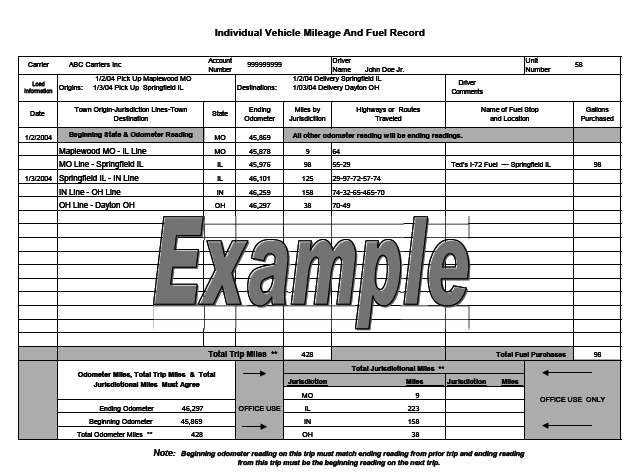
- 3) Is used in combination, when the weight of such combination exceeds 26,000 punds or 11,797 kilograms gross vehicle or registered gross vehicle weight. Qualified Motor Vehicle does not include recreational vehicles. If you operate a CDL required vehicle in interstate commerce, the vehicle, with few exceptions, is required to be registered under the International Registration Plan (IRP) and the International Fuel Tax Agreement (IFTA). These federally mandated programs provide for the equitable collection and distribution of vehicle license fees and motor fuels taxes for vehicles traveling throughout the 48 contiguous United States and 10 Canadian provinces. Under the IRP, jurisdictions must register apportioned vehicles which includes issuing license plates and cab cards or proper credentials, calculate, collect and distribute IRP fees, audit carriers for accuracy of reported distance and fees and enforce IRP requirements. Registrant responsibilities under the Plan include applying for IRP registration with base jurisdiction, providing proper documentation for registration, paying appropriate IRP registration fees, properly displaying registration credentials, maintaining accurate distance records, and making records available for jurisdiction review. The basic concept behind IFTA is to allow a licensee (motor carrier) to license in a base jurisdiction for the reporting and payment of motor fuel use taxes. Under the IFTA, a licensee is issued one set of credentials which will authorize operations through all IFTA member jurisdictions. The fuel use taxes collected pursuant to the IFTA are calculated based on the number of miles (kilometers) traveled and the number of gallons (liters) consumed in the member jurisdictions. The licensee files one quarterly tax return with the base jurisdiction by which the licensee will report all operations through all IFTA member jurisdictions. It is the base jurisdiction's responsibility to remit the taxes collected to other member jurisdictions and to represent the other member jurisdictions in the tax collection process, including the performance of audits. An IFTA licensee must retain records to support the information reported on the IFTA quarterly tax return Make sure that any trips that you enter are always filled out in descending order and that your trips include all state/provinces that you traveled through on your route. Although the actual format of the IVDR may vary, the information that is required for proper record keeping does not. There are different routes that a driver may take, and most of the miles may be within one state or province. Whether or not the distance you travel is primarily in one jurisdiction or spread among several jurisdictions, all information for the trip must be recorded. This includes the dates, the routes, odometer readings and fuel purchases. By completing this document in full and keeping all records required by both the IRP and the IFTA, you will have ensured that you and your company are in compliance with all State and Provincial laws surrounding fuel and distance record keeping requirements. The IVDR serves as the source document for the calculation of fees and taxes that are payable to the jurisdictions in which the vehicle is operated, so these original records must be maintained for a minimum of four years. In addition, these records are subject to audit by the taxing jurisdictions. Failure to maintain complete and accurate records could result in fines, penalties and suspension or revocation of IRP registrations and IFTA licenses. For additional information on the IRP and the requirements related to the IRP, contact your base jurisdiction motor vehicle department or IRP, Inc. the official repository for the IRP. Additional information can be found on the IRP, Inc. website at www.irponline.org. There is a training video on the website home page available in English, Spanish and French For additional information on IFTA and the requirements related to IFTA, contact the appropriate agency in your base jurisdiction. You will also find useful information about the Agreement at the official repository of IFTA at http://www.iftach.org/index.php. In order to satisfy the requirements for Individual Vehicle Distance Records, these documents must include the following information: Distance Per Article IV of the IRP Plan (i) Date of trip (starting and ending) (ii) Trip origin and destination – City and State or Province (iii) Route(s) of travel (iv) Beginning and ending odometer or hubodometer reading of the trip (v) Total distance traveled (vi) In-Jurisdiction distance (vii) Power unit number or vehicle identification number. Fuel Per Section P560 of the IFTA Procedures If the vehicle you operate is registered under IRP and you are a motor carrier licensed under IFTA, then you are required to comply with the mandatory record keeping requirements for operating the vehicle. A universally accepted method of capturing this information is through the completion of an Individual Vehicle Distance Record (IVDR), sometimes times referred to as a Driver Trip Report. This document reflects the distance traveled and fuel purchased for a vehicle that operates interstate under apportioned (IRP) registration and IFTA fuel tax credentials. § At the beginning of the day § When leaving the state or province § At the end of the trip/day Not only do the trips need to be logged, but the fuel purchases need to be documented as well. You must obtain a receipt for all fueling and include it with your completed IVDR. Manual .300 An acceptable receipt or invoice must include, but shall not be limited to, the following: .005 Date of purchase .010 Seller's name and address .015 Number of gallons or liters purchased; .020 Fuel type .025 Price per gallon or liter or total amount of sale .030 Unit number or other unique vehicle identifier .035 Purchaser's name An example of an IVDR that must be completed in its entirety for each trip can be found in Figure 1 below. Each individual IVDR should be filled out for only one vehicle. The rules to follow when trying to determine how and when to log an odometer reading are the following: Figure 1 – Individual Vehicle Mileage & Fuel Record (Example)